From Damage Control to Intention
Jelena Ostapenko’s U.S. Open “apology” shows why so many public statements fall flat.


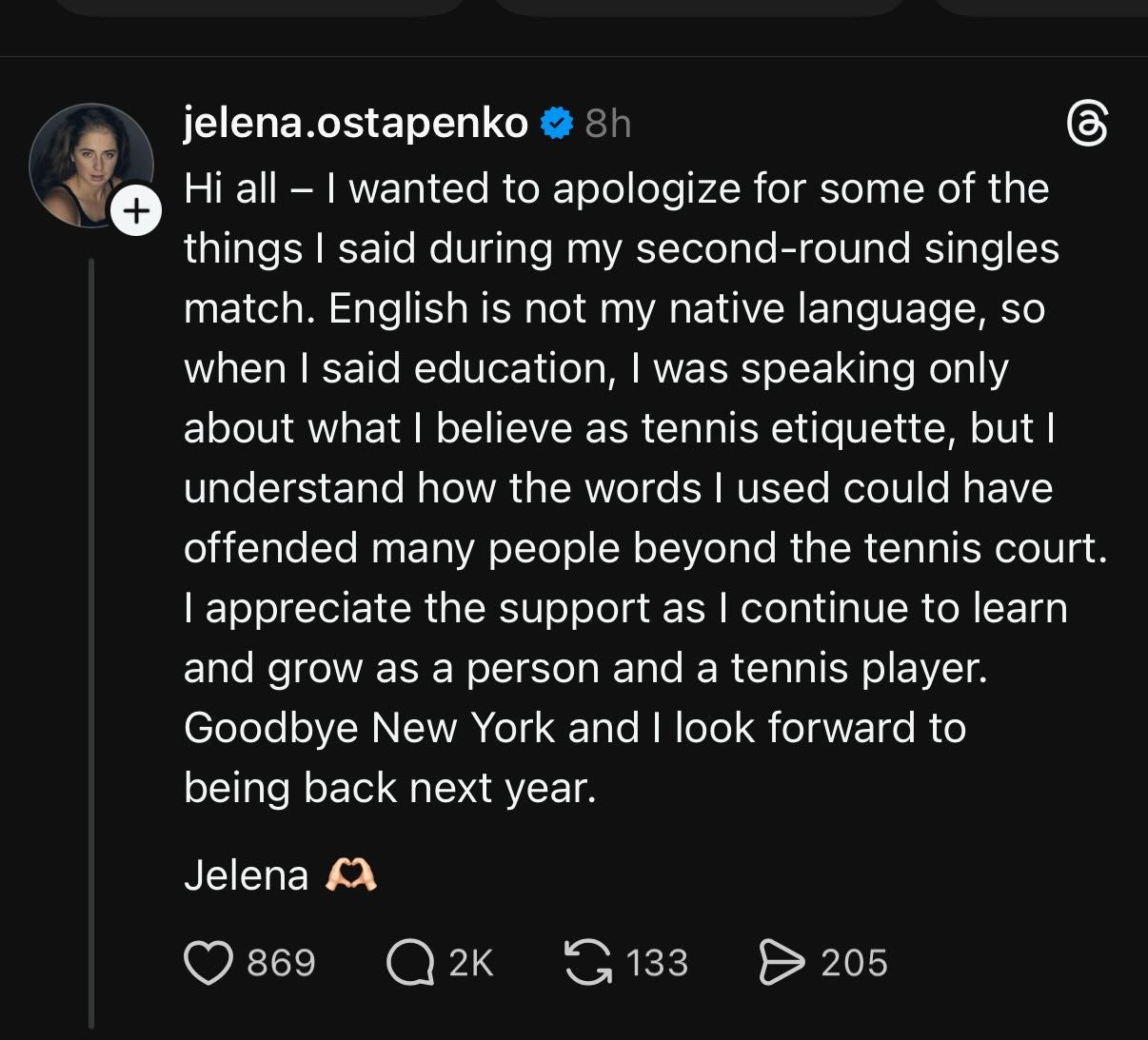
I didn’t see the match live. But even if you don’t follow tennis, it was hard to miss the headlines: Jelena Ostapenko was called out for remarks that many described as racially charged toward Taylor Townsend during their U.S. Open match. The clip circulated quickly. The apology followed just as quickly, and yet it left me unsettled.
Maybe you saw it too. Maybe you’re also wondering why it didn’t feel like an apology at all. That gap - between the words said and the responsibility avoided - is what pulled me into reflection this week.
Because here’s the thing: this isn’t just about Ostapenko. It’s a pattern we’ve all seen play out in sports, in politics, in the workplace, even in our own lives. Someone is called out. A statement appears. And yet something is missing: the honesty, the ownership, the intention.
That’s where I turned to Actively HUMAN, the tool I’ve been building from the framework A More HUMAN Approach™. It doesn’t hand out ready-made answers. Instead, it slows us down with better questions - the kind that surface what’s true, what matters, and how we intend to move forward.
Here’s how Actively HUMAN reflected Ostapenko’s moment back:
It sounds like you’re caught between the weight of what was said and the impact it’s having now. There’s pressure from the outside world to respond, but also an inner pull to sort out what you truly mean, what you regret, and how much of this moment you want to own. The tension here is between public expectation and personal integrity.
Here are five HUMAN reflections for you to sit with:
Honesty — What’s the part of your comment’s impact that you haven’t admitted to yourself yet, even if others are already naming it?
Urgency — If you delay your response, what’s at risk — for your reputation, for those hurt, or for your own ability to stand in your truth?
Meaningfulness — How could your response go beyond managing backlash and actually point toward the values you want to live by?
Accountability — Where is it yours to listen more than to explain — and how might that shape the tone of any apology or statement you make?
Nuance — What shifts when you see this moment not only as a personal crisis but as part of a larger conversation about race, respect, and responsibility in sport?
Reading those questions, I couldn’t help but think: how often do we all slip into the same trap? How often do our apologies sound more like explanations, or defenses, or attempts to get out of trouble - rather than a real effort to own what’s ours and act with intention?
That’s why this story stuck with me. It’s not only about one tennis player. It’s about us. It’s about how we show up when our words miss the mark. A More HUMAN Approach™ doesn’t promise perfection, but it does invite us into honesty, urgency, meaningfulness, accountability, and nuance.
So the real question isn’t “How do I get out of this?” It’s “How do I move forward with intention that matches the weight of the moment?”
I’d love to hear how this landed for you. Have you noticed this same pattern in other places, or maybe even in your own life? Share your thoughts in the comments; I’d be glad to continue the reflection there.